
Introduction
Modern offices need to do more than provide desks and meeting rooms. They must support concentration, encourage collaboration, reflect a company’s identity, and adapt as teams change. Yet one part of the workplace is often overlooked when planning these improvements: the walls. With the right materials and design, office walls can contribute to a more comfortable working environment instead of serving only as boundaries between spaces.
PET acoustic panels offer a practical way to combine wall design with sound absorption. Made from polyester fibres, with recycled content available in suitable products, these panels can help manage reflected sound while introducing colour, texture, and visual interest. For businesses updating an existing workplace or planning a new interior, they provide an option worth considering as part of a wider acoustic design.
Why Office Walls Deserve More Attention
When people discuss office noise, they often focus on loud conversations, ringing phones, printers, and video calls. These are obvious sources of disruption, but the way sound behaves inside a room also affects how comfortable the space feels.
Hard surfaces such as glass, plasterboard, concrete, and other smooth finishes can reflect sound. When reflections continue around a room, speech may become harder to follow, and several conversations can blend into a general background of noise. Employees may find themselves speaking louder to be heard, adding further sound to the environment.
Walls provide an opportunity to address some of these reflections. Instead of treating every wall as a purely decorative surface, workplace designers can consider where sound-absorbing materials would be most useful. A suitable acoustic wall treatment can help reduce reverberation and make everyday conversations easier to manage.
The best results depend on the entire room. Ceiling construction, flooring, furniture, partitions, occupancy, and the types of activities taking place all influence acoustic conditions. Wall panels should therefore form part of a considered solution rather than being selected as a standalone cure for every noise problem.
What Makes PET Acoustic Panels Suitable for Offices?
PET stands for polyethylene terephthalate, a type of polyester used in many everyday products. In acoustic applications, PET fibres can be formed into felt-like panels designed to absorb sound.
These panels are available in different thicknesses, colours, shapes, and surface designs, depending on the product range. This gives designers flexibility when coordinating acoustic improvements with an office’s existing furniture, branding, and architectural style.
The Acoustics Company’s wall product collection includes different approaches to acoustic wall treatment, including PET panels and decorative surface options. Its Alpha Panel, for example, is made with a minimum of 75% post-consumer recycled PET fibre and is available in 12 mm and 24 mm thicknesses. The exact specification should be checked against the requirements of each project.
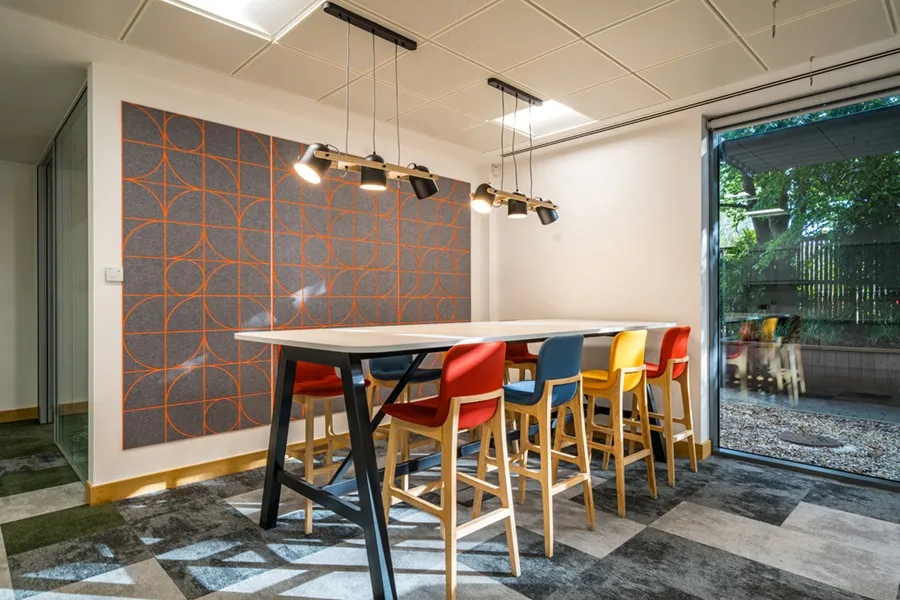
For offices, the appeal lies in combining a functional material with an adaptable design surface. Panels can be used to introduce colour, establish visual zones, or create a feature wall while contributing to the management of reflected sound.
Use Wall Treatments to Support Different Work Activities
Not every part of an office has the same acoustic needs. A reception area, a row of individual workstations, a collaborative project zone, and a meeting room may all require different approaches.
Open Work Areas
Open-plan offices allow employees to communicate easily, but they can also create competing sound sources. Conversations from neighbouring teams may travel across the space, particularly when large surfaces reflect sound.
Acoustic panels on selected walls can help reduce reflections within these areas. They are particularly worth considering near shared work zones, along large uninterrupted wall surfaces, or around spaces where employees spend long periods concentrating.
Wall treatment will not eliminate speech travelling directly from one workstation to another. It works best when combined with sensible workstation planning, suitable ceiling absorption, and other measures that address how sound moves through the office.
Collaboration Zones
Teams often need areas where they can discuss ideas, review documents, or work through problems together. These spaces naturally generate more conversation than quiet work zones.
PET wall panels can help distinguish collaboration areas visually without relying entirely on permanent construction. A different colour or panel arrangement can mark the zone, while the acoustic treatment helps manage some of the sound reflected from surrounding surfaces.
This approach can be useful in offices where layouts may change over time. Designers can coordinate wall treatments with movable furniture and other flexible elements to create a consistent appearance without making every area look identical.
Reception and Visitor Areas
A reception area communicates something about a business before a conversation even begins. Materials, colours, lighting, and signage all influence that first impression.
Decorative acoustic panels can make an otherwise plain wall more engaging while helping control reflections in the space. They may be arranged as a feature behind a reception desk, beside a waiting area, or along a corridor connecting different departments.
The design should still respect practical needs such as signage visibility, access to switches, cleaning requirements, and the durability expected in a frequently used public area.
Meeting and Project Rooms
Meeting rooms need an environment in which participants can follow discussions without excessive echo. This is particularly important for hybrid meetings, where microphones must capture speech clearly for remote attendees.
PET panels installed on suitable wall surfaces can contribute to a more controlled acoustic environment. Their position should be planned around the room’s dimensions, the location of the display, the meeting table, glazing, and any other existing sound-absorbing materials.
Where privacy between rooms is the main concern, wall-mounted absorption alone is not sufficient. Sound isolation depends on the construction of walls, doors, glazing, and other building elements.
Choose a Panel Design That Fits the Interior
Acoustic improvements do not have to make an office look technical or industrial. PET panels can be incorporated into a broad range of interior styles, from understated corporate environments to more colourful creative workplaces.
Colour selection is one of the simplest ways to create a cohesive scheme. Neutral shades can complement timber furniture and muted interiors, while stronger colours can help define shared spaces or echo a company’s visual identity. Before making a final selection, it is useful to review samples in the actual room because natural and artificial lighting can change how a colour appears.
Panel arrangement also affects the finished result. A straightforward, consistent layout may suit a formal office, while a more varied arrangement can bring character to a breakout space. Repeated shapes or carefully aligned panels can create order, particularly across long walls that might otherwise feel empty.
Texture and profile provide another design opportunity. Depending on the selected product, a wall treatment may remain relatively subtle or become a prominent architectural feature. The choice should complement the furniture, flooring, lighting, and other finishes rather than competing with them.
Good design also considers the details around the panels. Electrical outlets, access points, signs, wall-mounted displays, and future maintenance requirements should be identified before installation. This helps avoid unnecessary cutting, awkward gaps, and changes to the intended layout.
Think About Sustainability and Product Documentation
Material selection increasingly involves questions about recycled content, product durability, and end-of-life options. PET acoustic panels for office spaces may be attractive to projects with sustainability objectives, but environmental claims should always relate to the specific product and its supporting documentation.
For example, a panel made with recycled PET content should be assessed using its declared composition rather than assuming that every polyester acoustic product contains the same proportion of recycled material. Recyclability claims also need to be considered in the context of the actual product, any additional components, and the available end-of-life route.
Project teams can review technical information covering material composition, fire performance, emissions, acoustic performance, dimensions, and installation requirements. These checks are important in commercial environments where the selected product must meet the building’s specification and applicable regulations.
A product’s sound absorption should also be evaluated using relevant test information. Performance can vary with panel thickness, mounting method, and the wider construction. Choosing a product based on verified information helps designers set realistic expectations and compare suitable options more accurately.
Plan the Installation Around the Existing Workplace
Retrofitting acoustic panels into an occupied office requires coordination. The installation team should understand how the space is used, which walls can accommodate the selected system, and whether the work will affect daily operations.
A sensible process begins with identifying the main acoustic concerns. Employees may report difficulty concentrating near a particular team, excessive reverberation in a shared area, or poor speech clarity during meetings. These observations help narrow down the locations that deserve closer attention.
The next step is to assess the room and decide whether wall panels alone are appropriate. In some offices, a combination of wall treatments, ceiling absorption, screens, and changes to the layout may be more effective. The aim is to address the actual problem rather than simply cover the largest available wall.
Before installation, confirm the substrate, fixing method, panel dimensions, finish, and relevant technical requirements. Samples or layout drawings can help stakeholders approve the appearance before the full quantity is ordered. Planning around furniture moves, electrical access, and working hours can also reduce disruption.
Once the panels are installed, the workplace can be reviewed to see whether the original concerns have improved. This is especially useful for larger projects, where observations from employees and acoustic assessments may inform future adjustments.
Keep Performance and Appearance in Balance
A successful office interior should look considered and work well in everyday use. Acoustic panels should not be chosen only because they match the colour scheme, nor should appearance be ignored in favour of technical performance.
The right approach balances the room’s acoustic requirements with practical considerations such as cleaning, durability, installation, available wall space, and future changes to the layout. It also recognises that sound absorption and soundproofing are different objectives. Panels can help control reflections inside a room, but they do not automatically prevent conversations from passing through walls or doors.
For businesses planning an office refurbishment, reviewing the available wall-treatment options early can make it easier to coordinate the acoustic design with other interior decisions.
Conclusion
Office walls can contribute much more than visual separation. With a suitable specification, PET acoustic panels can help manage reflected sound while supporting the appearance and functionality of the workplace. They offer opportunities to define collaborative areas, improve the feel of reception spaces, and bring colour and texture into otherwise plain interiors.
The most effective solution begins with understanding how each area is used and where acoustic problems occur. From there, businesses can compare panel materials, finishes, installation methods, and verified performance information before choosing a suitable system.